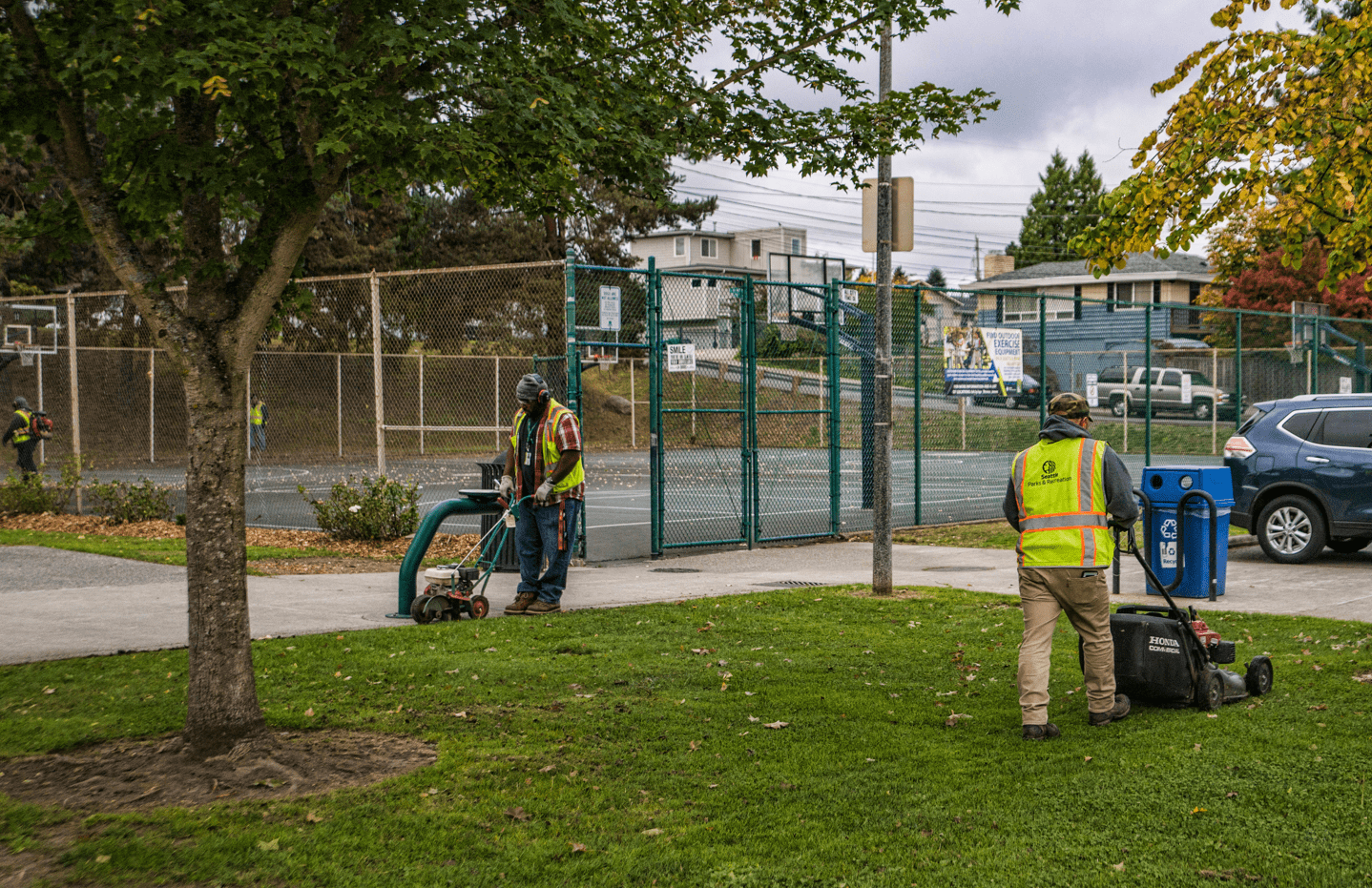
If you’ve visited a Seattle park recently, you may have noticed that grass is growing quickly, and in some places it’s longer than expected. This is typical for this time of year and reflects how Seattle Parks and Recreation manages park landscapes each spring.
April through May is peak mowing season. All parks are scheduled to be mowed, but work is prioritized based on how spaces are used. Athletic fields, high-traffic areas, park entrances, and pathways are maintained first to support safety and access.
At the same time, spring brings ideal growing conditions. Warmer temperatures and longer daylight hours cause grass to grow quickly, sometimes faster than mowing schedules can keep up. In addition, some turf areas remain too wet to safely support mowing equipment. These areas are closely monitored and will be mowed as soon as conditions allow.
A Thoughtful, Seasonal Approach
Grass management across Seattle’s parks is intentional and varies depending on landscape type and use. Some areas are actively maintained lawns, while others are managed more passively. In certain locations, grass may be allowed to grow longer in the spring to support stronger root systems, which helps turf stay healthier and more resilient through the busy summer season.
You may also notice areas that look less maintained by design. As highlighted in a previous Parkways post (Why is the Grass Long? – Parkways), leaving grass longer in select spaces can support pollinators and provide habitat for wildlife, especially during nesting season. These areas are part of a broader landscape management strategy and are mowed later in the year.
What to Expect
As spring progresses, you’ll continue to see mowing activity increase across the city. While some areas may look overgrown for short periods, crews are actively working through parks based on priority, weather, and ground conditions.
We appreciate your patience as we care for Seattle’s parks during this busy growing season, and as always, our goal is to balance safety, access, environmental stewardship, and the long-term health of our green spaces.