By Todd Burley
You’ve likely heard the phrase “have your cake and eat it, too.” Well, what if you could also reduce stormwater runoff and save a wetland, too? In two separate projects in Seattle’s parks, innovative partnerships and solutions are doing just that. In celebration of the United Nations World Wetlands Day, Seattle Parks and Recreation (SPR) is highlighting two projects that are reclaiming nature and also reducing impacts on the city’s stormwater systems.
Arboretum Creek Headlands
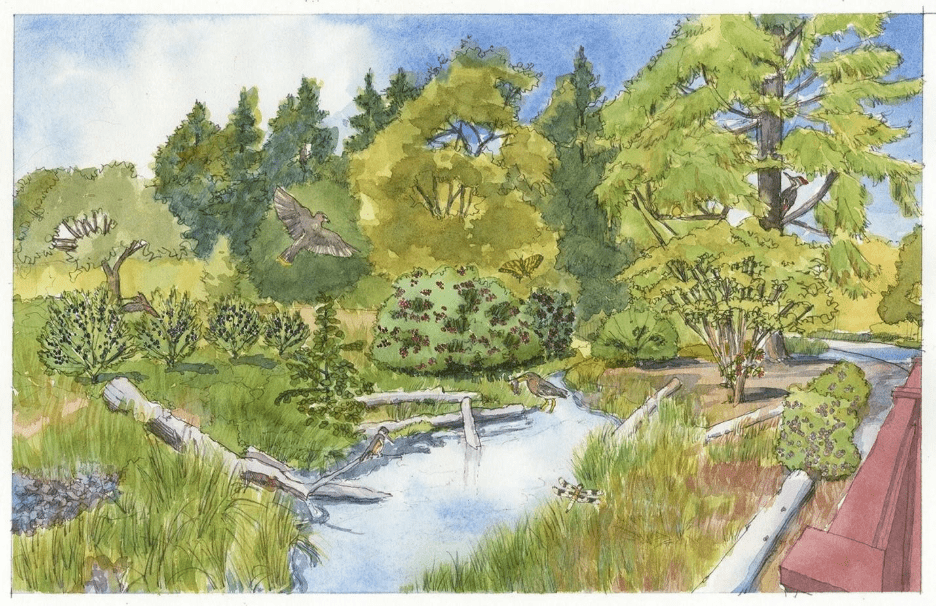
Rendering of future Arboretum Creek, Illustration by Gail Wong. Paid for by the Seattle Neighborhood Matching Fund.
Nestled on the western edge of the Washington Park Arboretum a creek and wetland are coming back to life. Historically, Arboretum Creek was fed by runoff from slopes to the west and east, but development cut off much of the flow, leading to a diminished riparian ecosystem. In 2017, as part of the Arboretum Loop Trail Project, SPR worked with the US Army Corps of Engineers and others to recreate the creek bed, adding in meandering curves, removing invasive plants, and adding in native species appropriate for such a wet site. Yet the creek is still low on water and thus does not provide the cool and abundant summer flows that help wildlife such as salmon thrive.
Friends of Arboretum Creek is now working with SPR and the Arboretum Foundation to redirect three springs to Arboretum Creek through the Headwaters Project. Currently these springs lead to seasonal flooding of the Japanese Garden and increase flows into the combined sewer overflow system during storms causing water quality problems in Lake Washington. The new project, which is in design currently, hopes to boost water flow to the creek and also incorporate an innovative green stormwater infrastructure system to filter incoming water before it reaches the creek and wetlands. The Headwaters Project is expected to be completed in 2027.
Roxhill Bog Restoration
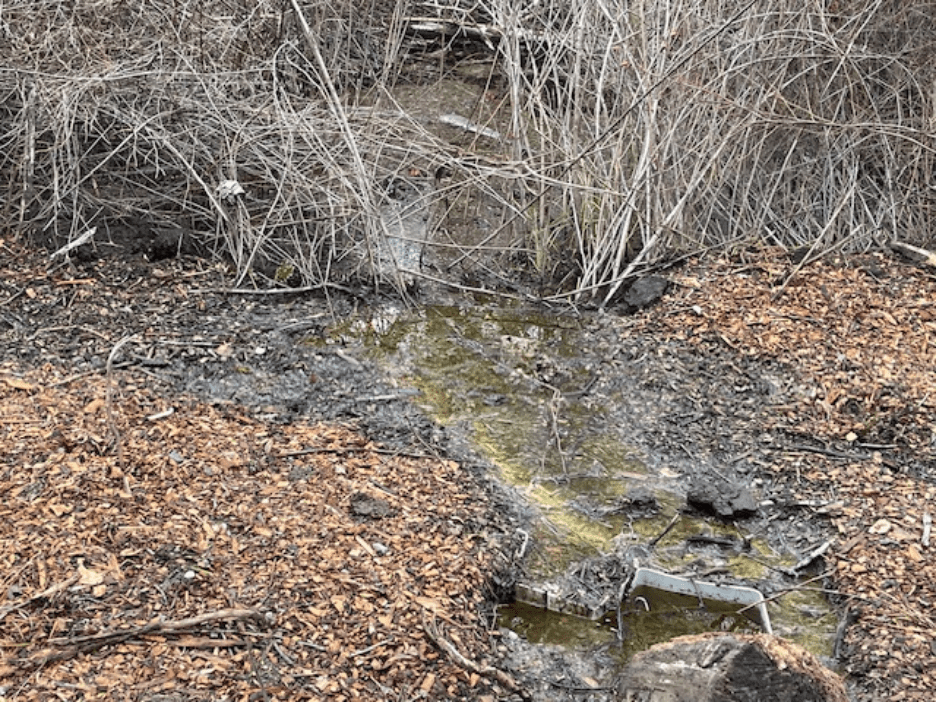
Water returns to Roxhill Bog, photo by West Seattle Blog
On the far southern edge of Seattle, Roxhill Park hosts one of the few remaining peat bogs in the city. These unique ecosystems developed over thousands of years and are a critical natural sponge for the headwaters of Longfellow Creek. However, urban development has so disrupted the hydrology of the area, that much of the peat has dried up, even leading to a peat fire in 2017. Yet a strong coalition of community members and organizations, including the Roxhill Park Champions, Duwamish Alive Coalition, Delridge Neighborhood Development Association, American Rivers, Natural Systems Design, and Seattle Parks Foundation have worked with SPR to restore this ecosystem over the last decade.
Research into solutions led to the recently completed project to install a pilot groundwater barrier in one of the peat “cells” to retain water that has been flowing out of the former-wetland too quickly, instantly restoring wetland processes. The community celebrated this accomplishment recently and plans are now in the works for Seattle Public Utilities to also add more flow using treated water from the stormwater system and for additional barriers to be placed to store more water. The result will be a restored wetland, cleaner water, improved habitat, and reduced stormwater impacts.
In addition to the improvements to habitat and water management, both these projects show how community advocates such as those listed above, thoughtful research, and support from Seattle Parks and Recreation’s Heavy Crew, Natural Area Crew, Green Seattle Partnership, and Arboretum Grounds Maintenance Crew and Southwest District Grounds Maintenance Crew, can work together to restore a thriving environment for our community. We’d also like to show gratitude for grant funding from King County Water Works, The Rose Foundation, Boeing and others for making these projects possible. We are long-term stewards of these ecosystems and working together we can bring nature back to the city using nature-based solutions.