By Todd Burley
Urban parks are, well, urban. Which means that many wild animals cannot make a home here. However, every summer our parks come alive with species that find these pockets of habitat in our midst and brighten them up with their activity and color.

Pollinators are important ecological actors that we all depend on. They ensure our apple trees produce fruit and enable all flowering plants are able to propagate. From your veggie garden to the salmonberries in our natural areas, these insects and birds play a key part in a thriving environment in our parks.
Some pollinators are here all year, such as ground-nesting native bees that hunker down for the winter and emerge in the spring to begin their work. Others come for the bounty our region provides, such as the Rufous Hummingbird that migrates from Mexico and Central America to spend their summers here. September is often the last opportunity to see them before they head out (or in).
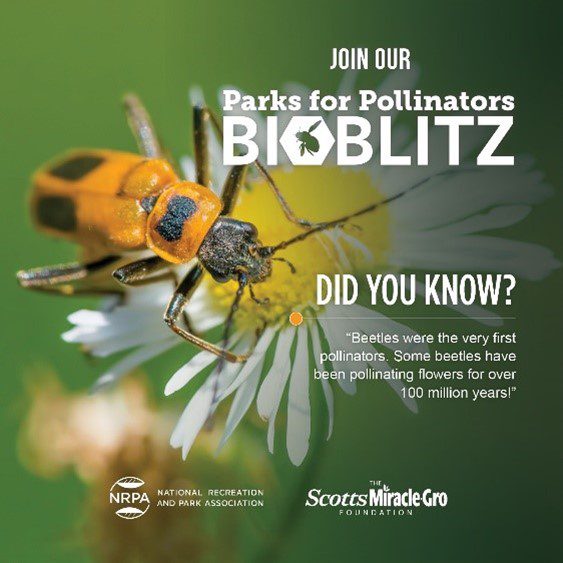
That’s why the National Recreation and Parks Association hosts the annual Parks for Pollinators BioBlitz each September. This community science event creates an opportunity to contribute to scientific knowledge in your own neighborhood park. Anyone can join by downloading the iNaturalist app on your phone (Android, iOs), heading out to your local park, and tracking your observations of pollinator species.
While all observations in parks are geolocated, it is helpful to join the Parks for Pollinators iNaturalist Project to directly link your observations to this effort. What’s even more exciting is that this bioblitz can be coupled with the City Nature Challenge that Seattle Parks and Recreation (SPR) participates in during the spring to get a better sense of what is here at the beginning and the end of the summer season.
So, grab your observation tools (a.k.a. smart phone) and head out to your neighborhood park this month! You can be part of a national science project and help SPR better understand what lives in our parks.